
Joint Supplements for Dogs: A Private Label Guide
Glucosamine is the entry ticket, not the product. In a category this mature, what separates one joint line from another is whether the dose survives the format, whether the dog will eat it daily, and whether the claims stay inside what the formula can support.
Walk into any pet specialty store and count the joint chews. The shelf is crowded because the ingredients are cheap to source and the format is easy to sell. That is exactly why a new line cannot compete on the word glucosamine: everyone already has it, and the buyer who picks up the pack has seen that word a hundred times.
What still separates products is less visible. It is the amount of each ingredient that actually fits in the piece, the format that a large dog will accept, and the discipline to keep the label inside support language. Those three things are where a private label project either holds or falls apart.
This guide is for the buyer specifying a joint line, not the owner choosing a brand.
Glucosamine is the entry ticket, not the product
Glucosamine is a building block the body uses in cartilage, and it is the ingredient every joint formula starts from because buyers expect it. That expectation is also the problem: a line that stops there has nothing to say that the pack beside it cannot say.
The way out is not to replace glucosamine but to build around it. Chondroitin is commonly paired with it, MSM is added for its sulfur contribution, hyaluronic acid appears for the joint fluid story, green lipped mussel brings a marine ingredient with its own profile, and collagen peptides give the formula something to say about connective tissue. Each one is a layer, and a layer is a reason for a buyer to choose your pack over the one next to it.
What a layer is not is a promise. Adding six ingredients does not make a formula six times as supportive; it makes it harder to dose well and harder to test. The formula space in a chew is finite, and every new ingredient takes room from the others.
A shelf word is not a formula.
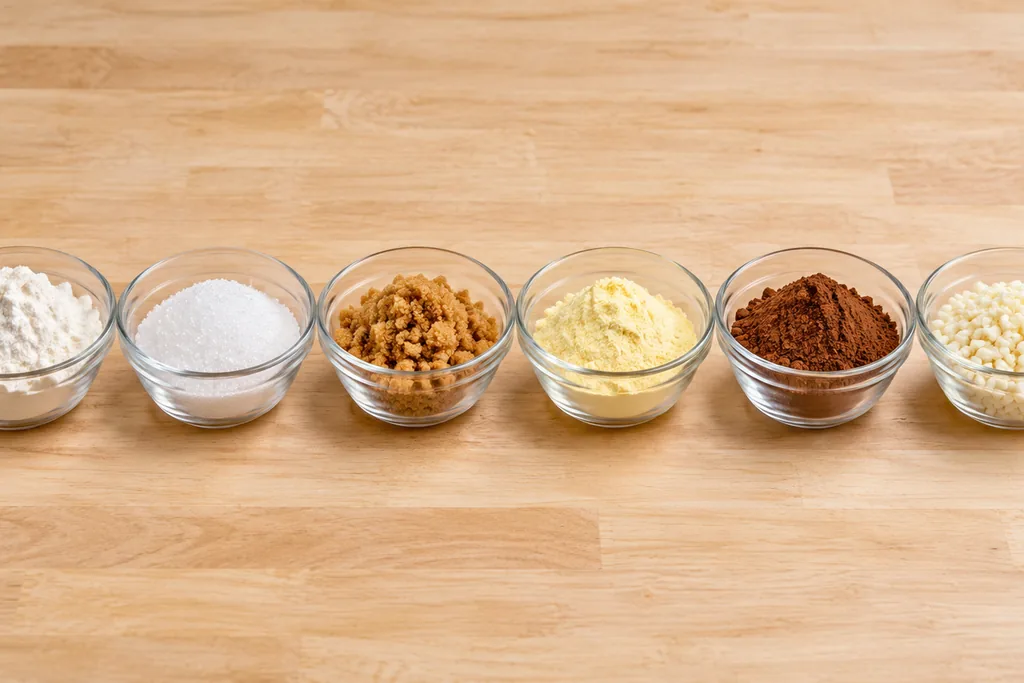
Ingredient layers and what each is for
The useful way to think about a joint formula is by role rather than by rank.
Glucosamine and chondroitin are the structural pair. They are the ingredients most buyers recognise, and they usually anchor the panel. MSM sits beside them as a sulfur source with its own line of reasoning. Hyaluronic acid is included for joint fluid and is usually present in much smaller amounts than the structural pair, which is why it is cheap to add and easy to overstate. Green lipped mussel is a whole-ingredient approach, valued because it brings a lipid and protein profile rather than a single compound. Collagen peptides are a newer addition aimed at the connective tissue story.
Notice what this list does not contain: a ranking. Which role matters more depends on the dog, the owner and the market, and a brand that claims to have solved that question is making a claim no supplier can document.
The practical consequence is that a formula should be designed around two or three roles well, not six roles badly. A joint chew with a clear structural base plus one supporting layer, dosed properly, is a more defensible product than a panel with nine ingredients at token levels.
Six names at trace levels is a label, not a formula.
Dose level is where most formulas fail
A panel listing an ingredient does not tell you how much of it the piece contains, and the gap between the two is where most private label joint products quietly fail.
Two constraints cause it. The first is physical: a chew is small, and the amount of any single ingredient that can be pressed into it is limited by taste, texture and the base itself. The second is cost: the structural ingredients are the expensive part of the formula, and a formula that reaches a meaningful level costs more per unit than one that lists the same ingredients at a fraction of the level.
This is where a buyer has to ask an uncomfortable question. Not "how much glucosamine is in this chew" in the abstract, but how the level was set: from a published reference, from the ingredient supplier's recommendation, from a veterinarian's input, or from whatever fit in the piece. Those are four different answers, and only the first three can be written down.
The way to hold a supplier to a level is to write it into the specification, with a testing method and a tolerance, and to check the first batch against it. If the level cannot be verified by an assay, it is a marketing number rather than a specification.
A dose nobody tested is a claim nobody checked.
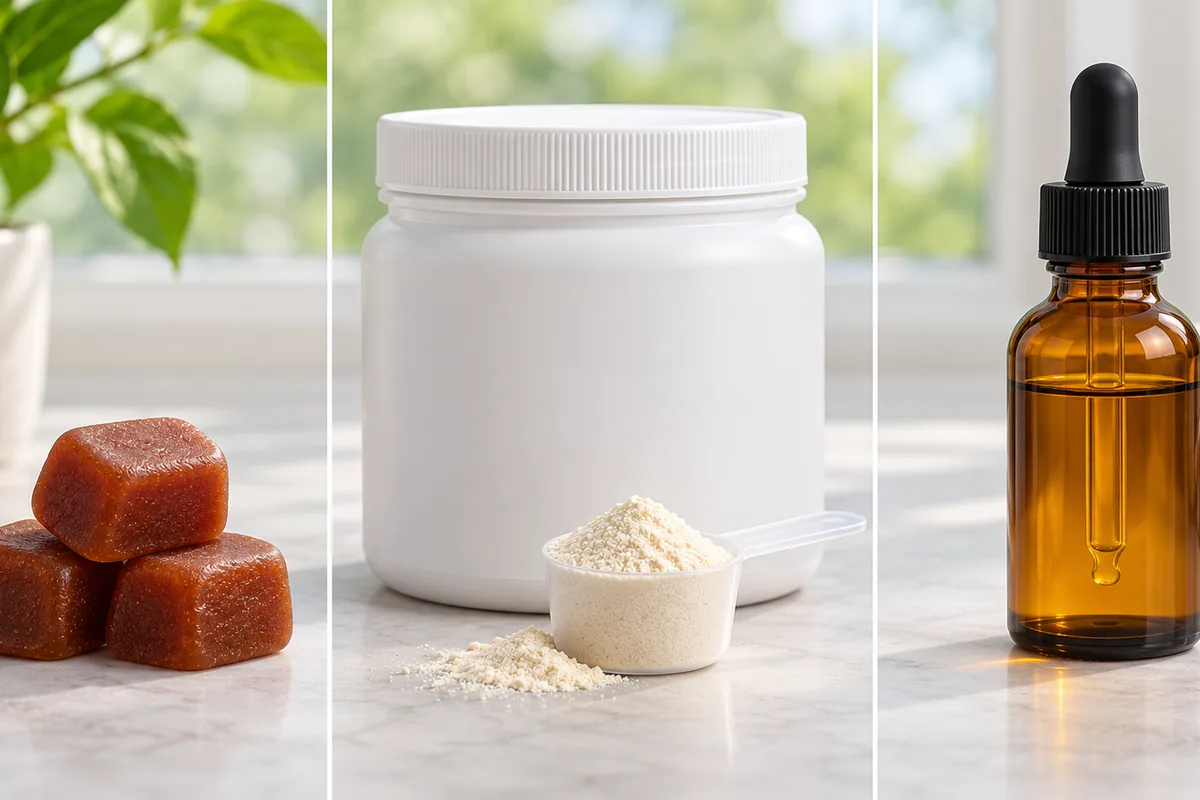
Which format actually gets eaten
The format decision looks cosmetic and is not. A formula only works if the owner gives it every day, and the owner gives it every day only if the dog takes it without a fight.
Soft chews are the default for this category because they behave like a treat. The base is palatable, the portion is obvious, and no measuring happens. The cost is formula space: the chew base takes room, and the structural ingredients compete with everything else for it. Large dogs need a bigger piece, which means either a larger chew or two, and both change the cost per day.
Powder is the format that gives the most formula room. It can carry a higher panel at a higher level, and it is measured into food, which suits owners who already mix supplements. The trade-off is compliance: a scoop per meal is a habit, and habits break.
Liquids are the easiest to give and the hardest to formulate, because the structural ingredients are not at their most stable in water, and flavour masking becomes a design problem. They work well for owners who want to dose over food without a scoop.
The right question is which format the buyer's customer will actually use, and a good supplier will ask that before quoting. A formulation that never gets eaten has zero effect, and an effect that never gets eaten has zero data.
Feeding is part of the specification.

Claims: support mobility, not treat arthritis
Joint claims split into the same two vocabularies as every other supplement category, and this is where new brands get caught.
Support language describes normal function: supporting normal mobility, supporting comfort during normal activity, supporting joint health as part of a normal routine. These statements describe a body working as it should, and they are what a documented formula can defend.
Disease language describes a condition: treating arthritis, managing hip dysplasia, reducing inflammation in a diagnosed joint disease. A pack that says "treats arthritis in senior dogs" is making a medical claim, and in most markets that puts the product in a different regulatory category with different evidence expectations. That sentence is the example of what not to write, and it is worth keeping in front of whoever drafts the artwork so it does not come back in a friendlier form.
The middle ground catches people. "Supports comfortable movement in older dogs" is a support claim. "Helps older dogs with arthritis move again" describes a result in a condition. The formula is the same; the regulatory position is not.
Write the claim before the artwork, and review both together.
What to ask a joint supplement manufacturer
The questions that separate a plant that has made joint products from one that has watched the category are specific and few.
Ask for the specification sheet with the level of each active ingredient and the tolerance, then ask which of those levels can be verified by assay on the finished product. Ask where each ingredient comes from and whether the supplier has a specification for it that includes identity testing, because a commodity ingredient with no identity test is a cost decision made for you.
Ask what happens to the panel in the format you chose. The same formula in a chew, a powder and a liquid will not test the same way, and the difference is the plant's process, not the ingredient list.
Ask for a batch record from a joint product it has run, with the assay results attached. Then ask what it does when an assay comes in below the specification.
The commercial and audit side of shortlisting a plant is covered in the guide to selecting ingredients for private label supplements, which is about the ingredient and supplier vetting that happens before a formula is written. What matters here is the joint-specific layer: the level, the assay and the format.
A specification you can test is the only specification.

MOQ, lead time and the first SKU
The commercial terms are the same across formats on this site, so the first SKU decision is about what the project needs to learn.
A first order is 100 units per SKU with a custom label and bottle. A printed outer carton raises the minimum to 500 units, since the carton is a separate print item with its own proof. Samples take 3–5 working days. Production runs 20–25 working days from confirmation of formula, artwork and deposit, with an expedited run at 10–15 working days when capacity allows.
For a joint line, a soft chew is usually the right first SKU, not because it is the easiest to formulate but because it is the format the customer already buys. It tests palatability, the panel in a real base, and the labels the retailer expects. If the chew works, the powder and the liquid become line extensions rather than experiments.
What the first SKU should prove is narrower than new brands expect: that the panel holds its declared level in this base, that the dog eats it, and that the label is defensible. Three things, checked on 100 units.
Hip and joint chews for dogs is the format most private label brands start with for those reasons, and the work goes into the panel rather than the shape of the piece.
FAQ
How much glucosamine should a dog joint supplement contain?
There is no single figure that applies to every product, and the number on another pack is not a specification. What a buyer can do is ask how the level was set, whether it can be verified by assay on the finished product, and whether the formula has room for that level in the format chosen. A supplier that answers those three questions has a formula; one that quotes a number without a basis is quoting a label.
Do joint chews actually work?
The honest answer is that they can support normal joint function, and the evidence for any specific ingredient sits inside a body of literature that is not a guarantee for your formula. What a buyer should not do is promise an outcome on the pack. What a buyer can do is make sure the level is real, the format is eaten daily, and the claim stays inside support language.
Is green lipped mussel better than glucosamine?
They do different jobs, so the comparison is a false one. Glucosamine is a structural building block; green lipped mussel is a whole ingredient with a lipid and protein profile of its own. Some formulas use both, and the reason is usually to give the panel two lines of reasoning rather than to rank them. A supplier that presents one as a replacement for the other is simplifying for the pitch.
What is the minimum order for a joint line?
100 units per SKU with a custom label and a bottle. Adding a printed outer carton raises the minimum to 500 units. The formula tier does not change between the two, so a 100-unit trial and a 500-unit run can use the same formula.
Can I claim it treats arthritis?
No. Arthritis is a diagnosed condition, and a claim to treat it is a medical claim that moves the product into a different regulatory category. Support language is what this category can use: supporting normal mobility, supporting comfort during normal activity. The formula still has to be documented, and the artwork still has to be reviewed against the claim.
Soft chew, powder or liquid for joints?
It depends on the customer, not on the ingredient. A chew suits owners who want no measuring and dogs that take treats; a powder suits owners who already mix into food and carries the largest panel; a liquid suits owners who dose over food and accepts a shorter development cycle with more formulation work. The format that gets given every day is the one that works.
Start from what the pack has to prove, not from the ingredient list. A joint formula needs a structural base at a level that can be assayed, a format the dog will eat without being coaxed, and a claim that stays inside support language. That is the whole brief, and everything else — the extra ingredients, the shape of the chew, the carton — is a decision made after those three are settled.
If you are at that point, send the format, the target market and the panel you have in mind. We will tell you what fits in the base, what the first batch can verify, and where the claim has to stop.