
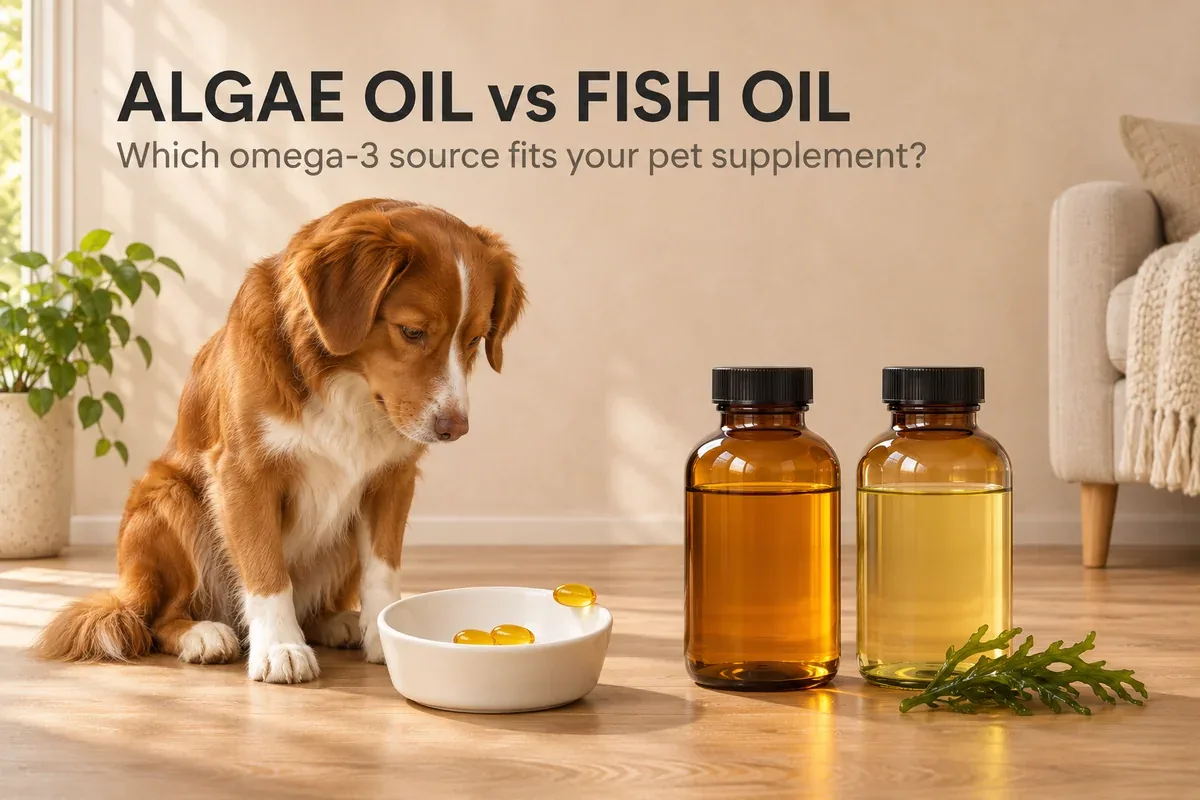
Algae Oil vs Fish Oil for Pet Supplements: A Buyer's Guide for Brands and Formulators
For most pet supplement brands, the choice between algal omega-3 and fish oil comes down to four factors: DHA concentration per gram, oxidative stability, supply risk, and what the label is allowed to claim. Neither source wins by default. The decision belongs to the market, the dosage form and the evidence file.
Key takeaways
- Algal oil and fish oil deliver the same two fatty acids, DHA and EPA, in different proportions and from different supply chains.
- Fish accumulate omega-3 by eating algae; algal oil is produced by fermentation, one step upstream in the food chain.
- The right question is not which source is better, but which fits your market, dosage form and label claims.
1. What actually differs between algal oil and fish oil
Algal oil and fish oil deliver the same two fatty acids — DHA and EPA — but in different proportions, and from different supply chains. That single sentence explains most of the practical differences buyers run into, and it is also why a simple "which one is better" comparison fails.
Composition: DHA-dominant vs EPA-dominant
Fish do not manufacture omega-3. They accumulate it by eating algae, so fish oil's fatty acid profile reflects the food chain below the fish. Species, fishing ground, season and refining grade all move the EPA-to-DHA ratio. "Fish oil" is therefore a category, not a fixed specification.
Schizochytrium sp. is a marine microalga grown in fermentation tanks. Its oil is typically DHA-dominant; EPA content depends on the strain, fermentation conditions and downstream processing, and some suppliers offer blends with a higher EPA share. Two algal oils with the same name can behave differently in a formula.
Compare measured values, not category names. A spec sheet listing total omega-3 without separating DHA and EPA says little about the finished product. Ask for a certificate of analysis from a real production lot.
What the comparison does not tell you
A higher concentration on a specification sheet does not automatically produce a lower formula cost. The number that matters is the cost per gram of delivered EPA and DHA in the finished product, after overage, processing losses and shelf-life retention.
Several factors move that number. If a source loses potency faster during storage, the batch needs more oil at the start to meet the label claim at the end of shelf life. If the taste needs masking, cost shifts into the flavor system. If the oil requires a larger capsule or a bigger chew, the serving size and packaging change with it. Testing and documentation add cost as well.
Two suppliers can quote the same price per kilogram and still produce very different finished-product economics. Compare the finished formula, not the raw material headline.
2. The comparison table buyers actually need
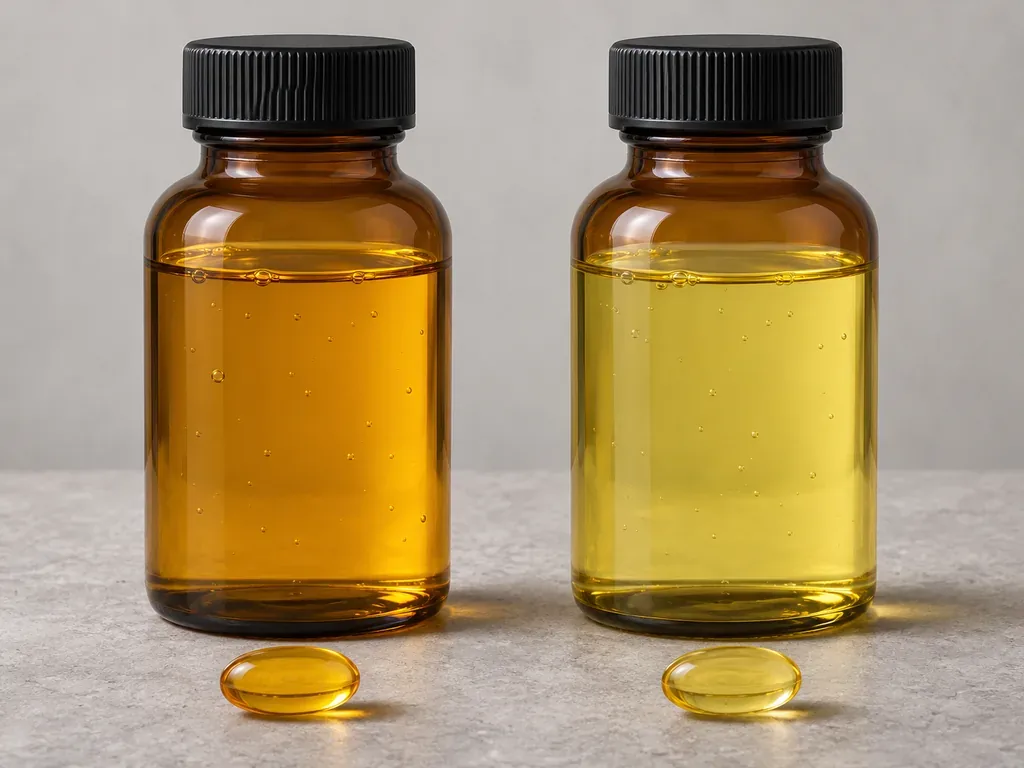
Most comparison tables try to score the two sources. This one eliminates options: compliance and market fit remove one path first, and cost and concentration decide among what remains.
| Factor | Algal omega-3 | Fish oil |
|---|---|---|
| EPA/DHA concentration | DHA-dominant; EPA is low or requires blending | EPA and DHA ratio varies with species and refining grade |
| Sustainability story | Does not directly consume wild fish; produced in fermentation tanks | Depends on wild fisheries, quotas and fishing seasons |
| Supply risk | Capacity limited by fermentation capital and expansion lead time | Single species or region fluctuations pass through to price |
| Cost structure | Usually a higher raw-material cost per unit of EPA+DHA | Raw-material price is volatile |
| Palatability and odor | Lighter odor, but not odorless; oxidation still produces off-notes | Fishy note; usually needs masking |
| Label claims | Can support algae-derived or plant-source omega-3 wording, subject to market rules | Can support marine or fish oil wording, subject to market rules |
This table is not a scorecard; it is an exclusion tool. Start with the claims your target market allows, then compare cost and concentration among the sources that survive. A market that expects marine-oil wording reads the table differently from a plant-positioned brand; both can be right. For a new line, the same logic feeds into custom formulas for dogs and cats.
3. What the research supports — and what it does not
Where the evidence is solid
DHA and EPA sit within the essential fatty acid family for dogs and cats, and both have a research base in areas such as skin and coat condition, joint and mobility, and cognitive aging. That is a statement about where research attention has gone, not a promise about what any single product will do.
The strength of the evidence varies by species, life stage, inclusion level, duration and the outcome being measured. A study in adult dogs does not automatically transfer to puppies, and a study on one oil does not transfer to another with a different fatty acid profile. Formulators should read the primary literature and match study conditions to the product they intend to sell.
Where supplier marketing outruns the evidence
Supplier-owned trials are common in this category. Many are never peer-reviewed, do not disclose sample size or full methods, and are presented as if they were independent research. They can inform a technical conversation but are not a sufficient basis for a label claim.
Independent, peer-reviewed work is starting to appear. A 2025 study in Algal Research evaluated the efficacy and safety of Schizochytrium-derived omega-3 in dog food (DOI 10.1016/j.algal.2025.104072). We cite it as evidence that independent research exists, not as proof of an outcome; read the paper for design, inclusion level and endpoints.
4. Claims you can make — and the ones that will get a product rejected
Supplements are not drugs
Under AAFCO's definition, a claim that a supplement mitigates, treats or prevents disease is a drug indication, not a feed claim. A product making that claim without drug approval is misbranded.
The practical rule: describe the nutrient and the formulation, not the disease. "A source of DHA and EPA" is a nutrient statement; a sentence naming a condition and implying the product resolves it is a different regulatory category. Review artwork, product pages and marketplace listings.
"Natural" has a definition
AAFCO's Natural page defines the term as ingredients from plant, animal or mineral sources, processed physically or by fermentation, without chemically synthesized additives. Fermentation-produced algal oil can fall within that definition. If the formula adds synthetic vitamins or minerals, the label may need the qualifier "natural with added vitamins, minerals and trace nutrients."
That qualifier changes the front of the pack and often the product name. Confirm the wording with the regulatory reviewer for each market before artwork is finalized.
Market by market
The United States, the European Union and other destinations do not apply identical rules to feed claims, ingredient identity or label language. A label approved in one market is not automatically acceptable in another; translated artwork can create claims never reviewed in the source language.
Plan a local regulatory and label review in every market you enter. This article deliberately does not cite clause numbers; those belong in the market-specific regulatory file kept by your compliance team.
Four claims that need substantiation
- Sustainably sourced. Requires a traceable supply chain and, where used, a recognized certification. Name what is certified, rather than using the adjective.
- Non-GMO. Requires a supply-chain statement covering the strain and fermentation feedstock, plus third-party verification where expected.
- Natural. Requires a process description and a complete additive list, including carriers and antioxidants.
- "Supports joint health." A structure-function claim that needs a substantiation file and market-specific review. Some markets restrict the wording even when the nutrient is permitted.
5. What brand buyers should check before choosing a source
The ingredient decision is only half of the sourcing decision. The other half is documentation proving the ingredient matches the claim. If you are still building your strategy, start with choosing ingredients for private label supplements and use the checklist below.
Documentation checklist
- Certificate of analysis with measured EPA and DHA for the actual lot, not spec-sheet targets.
- Peroxide value and anisidine value, with the test methods named.
- Heavy metals, PCB and dioxin results, plus microbiological testing.
- Allergen and source statement covering fish protein, residual media and carriers.
- Non-GMO statement and, where available, third-party verification.
- Sustainability certification, if a claim will be made, plus traceability to the origin.
- Regulatory identity of the ingredient for the target market and species.
- Supply assurance: capacity, minimum order quantity, lead time and an alternate origin.
- Stability data showing EPA and DHA retention across the intended shelf life.
- Change-control terms: notice of strain, refinery or origin changes.
Questions to ask on a supplier call
- Can you send certificates of analysis from the last three production lots, with EPA and DHA reported separately?
- Which oxidation tests do you run, and what limits do you apply?
- What is the regulatory status of this ingredient in our target market for our target species?
- If you change strain, refinery or origin, how much notice do we get?
- Can you support a pilot batch in our dosage form with stability data?
Red flags
- Potency comparisons such as "twice the strength" with no method or reference product named.
- A certificate of analysis that does not match the specification sheet.
- No oxidation data, or reluctance to name the test methods.
- Refusal to explain the ingredient's regulatory identity in the target market.
6. Cost, MOQ and lead time in practice
Switching omega-3 source is a formulation change, not a purchasing swap. The sequence is usually reformulation, stability validation, label rework, a pilot batch, and then scale-up. Each step carries cost and time, and label rework is most often underestimated.
MOQ starts at 100 units per SKU, including custom label and packaging. 500 units when a custom box is included. Custom formulas follow the same MOQ. Standard production takes 20–25 working days after the formula, artwork and deposit are confirmed. Fastest turnaround is 10–15 working days once capacity is confirmed (rush fee applies). Sample preparation: 3–5 working days. Those are planning figures, not a quotation: the sequence above must finish first, and the timeline depends on your market's documentation and testing.
Moving between dosage forms
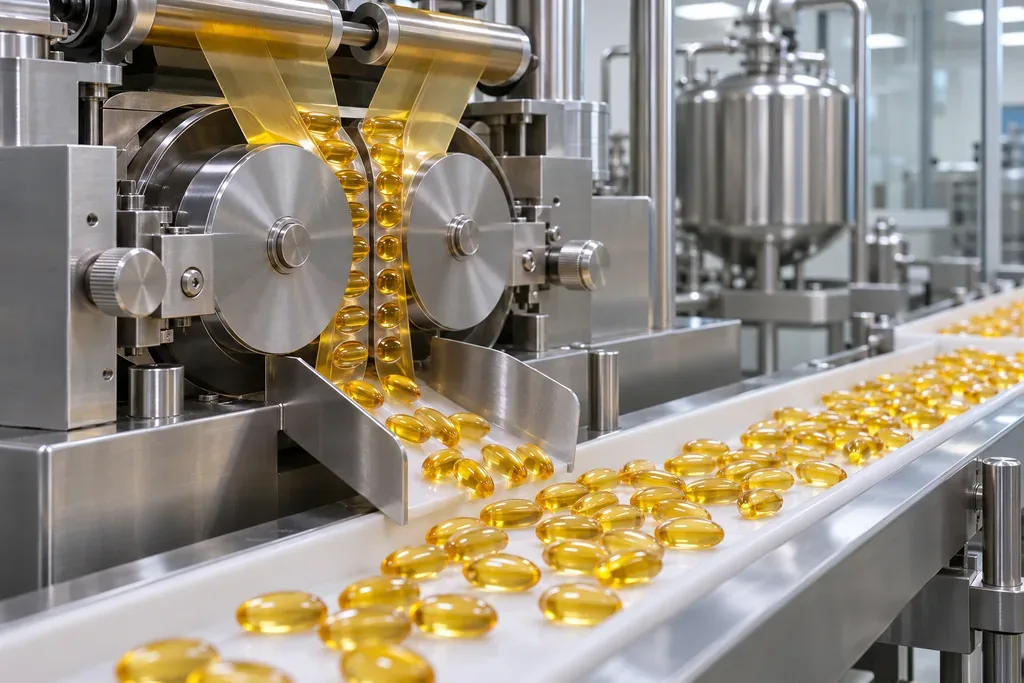
Fish oil is most often supplied as a softgel or a liquid. Algal oil fits softgels and liquids as well, and it is also used in soft chews. The dosage form changes the technical work: softgels need fill weight and oxidation control, chews need flavor masking and texture stability, and liquids need preservation and emulsion stability. The same three constraints decide whether skin and coat chews for dogs hold their claim through shelf life.
That is why a source change should be evaluated together with the dosage form, not before it. Our contract manufacturing for pet supplements team reviews the formula and the process together, and the private label pet supplements route covers artwork, packaging and label development.
7. How to decide: a three-step framework
- Market and compliance. Can you make the claim you want in your target market? If the answer is no, the source comparison is over before it starts.
- Dosage form and stability. Can the oil survive your format, your shelf life and your taste requirements? A source that fails stability testing is not a cheaper option.
- Delivered cost and supply assurance. What does a gram of EPA and DHA cost in the finished product, and can the supplier repeat it?
No universal order exists beyond these three steps, and no single answer fits every brand. A European brand with a chew format and a small first order lands differently from a US brand scaling a softgel line. The framework makes trade-offs visible; it is not a verdict.

FAQ
Is algae oil better than fish oil for dogs?
There is no single answer. The choice depends on DHA concentration per gram, oxidative stability, supply risk and the claims your label can legally carry. A plant-positioned brand may prefer algal oil; a marine-oil brand may stay with fish oil. Compare certificates of analysis and finished-formula cost, not category names.
Can dogs be allergic to fish oil, and is algae oil a safe alternative?
Fish oil can carry residual fish protein, and a dog with a diagnosed fish allergy may react. Algal oil avoids fish protein but is not automatically safe: it can contain residual fermentation media or other allergens. Ask both suppliers for an allergen and source statement, and have the formula reviewed by a veterinarian.
Does algal oil contain both EPA and DHA?
Usually yes, but in different proportions. Schizochytrium oil is typically DHA-dominant; EPA content depends on strain, fermentation conditions and processing, and some suppliers offer blends with a higher EPA share. The label should state measured EPA and DHA per serving, not total omega-3, so ask for a certificate of analysis that separates the two.
Is algal omega-3 vegan or non-GMO?
Algal oil is plant-source and contains no fish ingredients, which fits vegan and vegetarian positioning. Non-GMO status is not automatic: it depends on the fermentation feedstock, the strain and the supplier's documentation. Ask for a non-GMO statement and, where available, third-party verification. Keep the wording aligned with each market's rules.
How much EPA and DHA should a dog supplement contain?
This article does not give a dose. Requirements depend on body weight, life stage, health status, the base diet and the target market's nutritional guidance. A formulation team should set the inclusion level with a veterinarian or nutritionist, then confirm it against the finished-product label and local rules. Do not copy a number from another product.
Is algae oil more expensive than fish oil?
On a per-kilogram basis, algal oil often costs more than commodity fish oil, but the comparison that matters is cost per gram of delivered EPA and DHA in the finished formula. Concentration, overage, stability, masking and testing all change the number. Ask for quotes on the same specification.
Can a brand switch from fish oil to algal oil without changing label claims?
Usually not. A source change affects the ingredient list, allergen statement, sourcing claims and possibly the nutrient declaration. In most markets the label and artwork need revision and the new formula documented before the first batch. Plan for stability testing and a pilot run, and ask suppliers for the documentation your label review needs.
Which source is more sustainable?
Neither is sustainable by default. Algal oil does not directly consume wild fish, but fermentation uses energy and feedstock. Fish oil depends on wild stocks and can be covered by fishery certification schemes, which have their own limits. The credible answer comes from the specific supply chain: origin, certification, traceability and energy data. Ask for documents, not adjectives.
Sourcing omega-3 for your next pet supplement line
If you are weighing a source change, send us your target market, dosage form, target EPA and DHA inclusion and pack format. Our team reviews feasibility, flags label documentation, and proposes a sample and pilot-batch plan. WanZiBei operates a GMP, ISO 22000 and HACCP facility in Guangzhou, China, and our plant is FDA-registered — a facility registration, not a product approval. We support OEM and ODM work across 1000+ formulas for customers in 50+ countries. Review our pet supplement range or contact our formulation team to start.